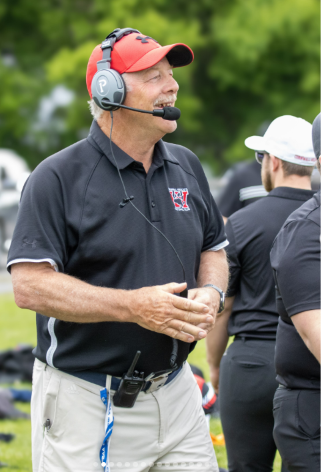
Phil Roberts, a respected Canadian football coach whose career spanned five decades, has died at the age of 70 following a recent diagnosis of amyotrophic lateral sclerosis (ALS), also known as Lou Gehrig's disease. His death on October 12, 2026, has prompted remembrances from the Canadian university football community, where he was honored for his commitment to developing young athletes and supporting players both on and off the field. Roberts built a distinguished coaching career across several Canadian football programs,…
Roberts built a distinguished coaching career across several Canadian football programs, including McGill University, Concordia University, the University of Ottawa, Carleton University and Queen’s University. He also made a lasting impression at Vanier College, where his teams won three provincial Bol d’Or championships during his tenure as head coach from 1987 to 1991.
In more recent years, Roberts served as defensive coordinator for the Cornwall Wildcats’ under-18 football team, continuing his work with young players and fellow coaches. His dedication to the sport earned him national recognition, including the prestigious Gino Fracas Award as U SPORTS’ volunteer assistant football coach of the year in 2016.
Beyond football, Roberts spent more than three decades working in education as a teacher and guidance counsellor in Montreal and Ottawa. His career reflected a long-standing commitment to helping young people develop their abilities, pursue opportunities and navigate life beyond the classroom.
Phil Roberts’ Cause of Death
According to an obituary published by McGill University Athletics, Phil Roberts died on October 12, 2026, at the age of 70. The university reported that he had recently been diagnosed with amyotrophic lateral sclerosis, commonly known as ALS or Lou Gehrig’s disease.
ALS is a progressive neurological condition that affects nerve cells responsible for controlling voluntary muscles. The disease can gradually impair movement, speech, swallowing and breathing. Its progression varies from person to person.
Although McGill confirmed Roberts’ recent diagnosis, the university’s announcement did not provide further medical details about his final days. It is therefore important not to make assumptions about the specific circumstances surrounding his death beyond the information publicly confirmed.
His passing marks the loss of a coach whose influence reached far beyond the football field, touching generations of student-athletes, colleagues and young people he supported throughout his career.
Key Facts About Phil Roberts
| Detail | Information |
|---|---|
| Full name | Phil Roberts |
| Age at death | 70 |
| Date of death | October 12, 2026 |
| Place associated with his later life | Ottawa, Ontario, Canada |
| Hometown | Deux-Montagnes, Quebec |
| Cause of death context | Recently diagnosed with ALS, according to McGill University Athletics |
| Profession | Football coach, teacher and guidance counsellor |
| University attended | McGill University |
| University graduation | 1979, with a degree in physical education |
| Playing positions | Football linebacker; also played varsity hockey |
| Notable coaching role | Head coach at Vanier College, 1987 to 1991 |
| Recent coaching position | Defensive coordinator, Cornwall Wildcats under-18 team |
| Major honour | 2016 Gino Fracas Award |
| Education career | 31 years in Montreal and Ottawa, according to McGill’s obituary |
| Survived by | Three daughters, an adopted son and a granddaughter |
| Funeral arrangements | Not announced in the McGill obituary at the time of publication |
A Football Career That Spanned Five Decades
Phil Roberts’ involvement in Canadian football began long before he became a nationally recognized coach. His career started in the late 1970s and developed into a decades-long commitment to the sport at youth, college, university and professional levels.
He played linebacker for McGill University from 1975 to 1978 and also competed with the university’s varsity hockey team during his final two seasons. After graduating in 1979 with a physical education degree, he continued pursuing football, including opportunities with professional organizations.
The British Columbia Lions selected Roberts in the fifth round, 51st overall, of the 1978 Canadian Football League draft. He attended training camps with the Lions and the Montreal Alouettes before using his remaining university football eligibility at Concordia University.
Although his playing career helped shape his understanding of the game, Roberts became especially well known for his work as a coach. He brought that experience to numerous programs, building relationships with athletes and helping develop players at different stages of their football journeys.
His longevity in the sport reflected a commitment that extended well beyond a single team or institution.
Leading Vanier College to Three Championships
One of the defining chapters of Roberts’ coaching career came at Vanier College in Montreal, where he served as head coach of the Cheetahs from 1987 through 1991.
During that period, his teams won three Bol d’Or provincial championships, establishing his reputation as a successful coach capable of developing competitive programs.
Roberts’ contribution extended beyond the results on the scoreboard. His coaching helped young athletes improve their skills and prepare for opportunities at higher levels of football. His broader career included players who went on to compete in university football and professional leagues.
The achievements at Vanier became an important part of his legacy and helped cement his place in Canadian football.
His later coaching positions continued to draw on the experience he developed during those championship seasons, as he moved between university programs and other football organizations.
Phil Roberts and His Contributions to University Football
Roberts worked with several prominent Canadian university football programs throughout his career.
He served at Concordia University in multiple periods, including an initial stint from 1984 to 1986 and a return as defensive coordinator and linebackers coach from 2000 to 2002. He later returned to the program in 2010 as defensive coordinator and recruiting coordinator.
At the University of Ottawa, Roberts held several roles across three separate periods. He coached linebackers from 1992 to 1994, worked as defensive coordinator from 2004 to 2008 and returned as special teams and linebackers coach in 2017.
He also served as an assistant coach at Carleton University from 1996 to 1998. His experience included part-time coaching positions with the Ottawa Renegades in 2003 and the Hamilton Tiger-Cats in 2004.
These appointments gave Roberts a broad view of the Canadian game and allowed him to contribute to different programs over many years.
Colleagues remembered him as someone who cared about the people behind the helmets and uniforms. His work emphasized relationships with players, mentoring and a willingness to remain involved long after individual seasons ended.
Recognition at Queen’s University and the Gino Fracas Award
Roberts joined the Queen’s University Gaels coaching staff in 2013, serving as special teams coordinator and linebackers coach.
Although he was based in Ottawa, he regularly made the journey to Kingston three times a week to fulfil his volunteer coaching responsibilities. That commitment earned him the Ontario University Athletics Volunteer Coach of the Year Award following the 2016 season.
Later that year, he received the Gino Fracas Award, which recognizes outstanding contributions by a volunteer assistant football coach in Canadian university football.
The award represented national recognition of Roberts’ dedication and the importance of volunteer coaches in developing university athletes.
His commitment to Queen’s was especially notable because he continued giving his time despite having already completed a long professional career in education and football. The regular travel between Ottawa and Kingston illustrated the effort he was willing to make for the players and program.
The recognition reflected not only his football knowledge but also his willingness to serve the sport without expecting the rewards associated with a full-time position.
His Later Years With the Cornwall Wildcats
Even after decades of coaching, Roberts remained involved in developing younger athletes.
McGill University Athletics reported that he spent five seasons as defensive coordinator for the Cornwall Wildcats’ under-18 team in the Ontario Summer Football League.
The role allowed him to continue working with young players at a formative stage in their athletic development. It also gave him another opportunity to mentor coaches and contribute to grassroots football.
His work with the Wildcats demonstrated that his interest in the game was not limited to university programs or championship teams. He continued to share his knowledge and experience with younger generations.
For those involved in youth football, coaches can have an influence that extends beyond technical instruction. They help athletes understand discipline, teamwork, accountability and the importance of supporting one another. Roberts’ extensive involvement across different levels of the sport formed part of that broader legacy.
A Dedicated Educator in Montreal and Ottawa
Football was only one part of Roberts’ professional life. He also devoted approximately 31 years to education, working as a teacher and guidance counsellor in Montreal and Ottawa.
According to McGill’s obituary, Roberts spent 12 years with the Protestant School Board of Greater Montreal before moving to Ottawa, where he worked another 19 years in the public school system.
His work included supporting young people who needed guidance with their education and future plans. He also worked with troubled youth at the Shawbridge Youth Centre, north of Montreal.
Beginning in 1992, Roberts served as a guidance counsellor at Colonel By Secondary School in Ottawa. He continued working with the Carleton Board of Education and its successor school board until retiring in June 2010.
The combination of teaching, counselling and coaching placed him in a position to support young people in different areas of their lives. His professional work extended from classrooms to football fields, where he could help students and athletes develop skills, confidence and direction.
The education community formed another important part of his life beyond the sport that brought him national recognition.
Tributes From Former Teammates and Coaching Colleagues
Following news of Roberts’ death, McGill University Athletics and Queen’s University Athletics published tributes highlighting his commitment to football and the people he coached.
Former McGill offensive coordinator Pat Sheahan recalled Roberts as a powerful athlete during his playing days and praised the length of his subsequent coaching career. Sheahan later hired Roberts to work with the Queen’s coaching staff.
Former McGill quarterback Vic Pywowarczuk also remembered Roberts as a memorable teammate who had a positive impact on many people. He described him as a coach who cared about his players as individuals and made an effort to maintain those relationships.
These recollections point to a recurring theme in accounts of Roberts’ career: his influence was not measured only by championships or coaching appointments, but also by the relationships he maintained with players and colleagues.
For athletes who encountered him at different points in their careers, his commitment to the game and to their personal development became a defining part of his reputation.
Phil Roberts’ Family and Personal Life
McGill University Athletics reported that Roberts is survived by his three daughters, Meagan, Amy and Michelle, his adopted son, Abraham, and his granddaughter, Anna.
Earlier career coverage published by Queen’s University and Football Canada also referred to his wife, Sue, whom he married after they became high school sweethearts. The university’s death announcement listed the family members who survive him, but the information reviewed for this article does not establish further details about his family’s circumstances following his death.
Roberts’ family life remained separate from his public achievements in football and education, although his career was supported by the time and commitment required to work across several cities and institutions.
The family has experienced the loss of a father and grandfather whose professional life involved mentoring generations of young people. Further details about private memorial arrangements should be included only if confirmed by the family or an official announcement.
Funeral and Memorial Arrangements
At the time of McGill University’s obituary, details about funeral services or memorial arrangements had not yet been announced.
The university stated that information about a funeral or memorial would be posted when available. Readers seeking updates should consult the university’s official announcement or notices shared by the family.
No unverified dates, venues or service arrangements have been included in this article.
Remembering Phil Roberts’ Legacy
Phil Roberts leaves behind a significant legacy in Canadian football and education.
From his playing days at McGill and Concordia to his championship success at Vanier College, his work with Queen’s University and his later role with the Cornwall Wildcats, Roberts remained involved in football across five decades.
His recognition as the 2016 Gino Fracas Award recipient highlighted the dedication he brought to volunteer coaching. His decades in education demonstrated a similar commitment to guiding young people beyond the playing field.
The recent ALS diagnosis reported by McGill adds a difficult final chapter to the story of a career defined by service, mentorship and long-term involvement in his community.
As former teammates, colleagues and athletes remember him, Roberts’ influence will continue through the people he taught, coached and encouraged throughout his life.
Disclaimer
This obituary is based on information published by McGill University Athletics, Queen’s University Athletics and other football organizations. The reported date of death and recent ALS diagnosis are attributed to McGill’s official announcement. Funeral arrangements were not available in the university’s obituary at the time of publication. Additional personal or medical details have not been included unless supported by reliable reporting.