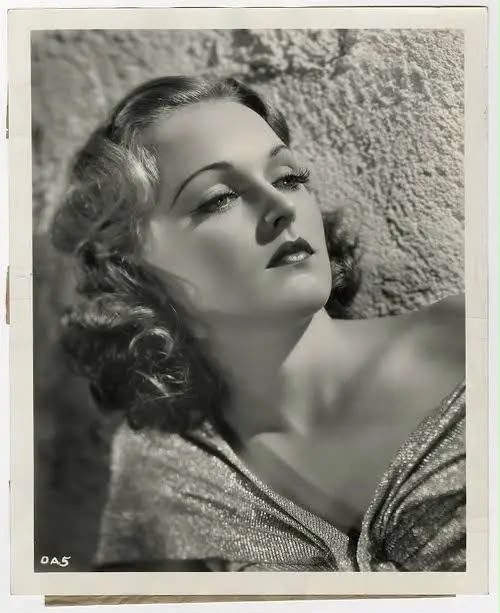
More than a century after she disappeared from the streets of Manhattan, the fate of Dorothy Arnold remains one of America’s most enduring missing-person mysteries. The 25-year-old daughter of a wealthy New York family vanished on December 12, 1910, after spending part of the day shopping in the city. Despite an extensive search, widespread newspaper coverage and numerous theories about what happened, no definitive explanation has ever been established.
Arnold was not simply a member of New York’s wealthy social circles. She was an aspiring writer who reportedly wanted greater independence than her family was willing to give her. Her disappearance raised questions about her private life, her ambitions and the circumstances surrounding her final known movements.
The case quickly became a national sensation, drawing investigators, journalists and people claiming to have information about her whereabouts. Reports of possible sightings and alleged confessions appeared over the years, but none conclusively resolved the mystery.
Today, Dorothy Arnold’s disappearance remains a reminder of how a person can seemingly vanish in a crowded city, leaving behind more questions than answers.
Who Was Dorothy Arnold?
Dorothy Harriet Camille Arnold was born in 1885 into an affluent New York family. Her father, Francis R. Arnold, worked as a successful importer, and the family occupied a prominent position in New York society.
Dorothy attended Bryn Mawr College in Pennsylvania, where she studied literature. After graduating, she returned to her family’s Manhattan home and pursued her interest in writing.
Although her privileged background might have suggested a comfortable future within high society, accounts of her life describe a young woman who wanted to establish an identity of her own.
She wrote short stories and submitted her work to publishers, hoping to build a literary career. Her efforts were not immediately successful, and at least one of her submissions was rejected by McClure’s magazine.
Historical accounts also describe disagreements over her desire for greater independence. Dorothy reportedly wanted to move into an apartment in Greenwich Village, an area associated with artists and writers, but her father did not support the idea.
These details later became central to speculation about her disappearance. Some writers suggested that she may have wanted to escape family expectations, while others believed that something far more sinister had happened.
Neither interpretation has been conclusively proven.
The Day Dorothy Arnold Disappeared
Dorothy disappeared on Monday, December 12, 1910.
That morning, she left her family’s residence on Manhattan’s Upper East Side. Accounts of the day indicate that she intended to go shopping, with some reports describing her plans to look for a dress ahead of a family social event.
She did not appear to be preparing for a permanent departure. Reports stated that she left behind her clothing, jewelry and passport.
During the day, Dorothy visited businesses along Fifth Avenue. She reportedly purchased a book and a box of chocolates before encountering a friend near Fifth Avenue and East 27th Street.
The brief meeting would become one of the most important details in the investigation because it was among the last confirmed sightings of her.
Dorothy spoke casually with her friend and reportedly mentioned that she intended to walk home through Central Park.
After that encounter, her movements could not be reliably established.
When she failed to return home for dinner, her family became concerned. At first, they sought help privately because they feared the scandal and unwanted publicity that could accompany a high-profile disappearance.
The family hired private investigators, including agents associated with the Pinkerton Detective Agency. When those efforts failed to locate Dorothy, the search eventually became public.
Key Facts About the Dorothy Arnold Disappearance
| Detail | Information |
|---|---|
| Full name | Dorothy Harriet Camille Arnold |
| Birth year | 1885 |
| Age when she disappeared | 25 |
| Date last seen | December 12, 1910 |
| Last known location | Manhattan, New York City |
| Family background | Wealthy New York family |
| Father | Francis R. Arnold |
| Education | Bryn Mawr College |
| Known ambition | Writing and literature |
| Investigation | Private investigators and New York authorities |
| Major theories | Voluntary disappearance, kidnapping, murder and an alleged medical emergency |
| Confirmed outcome | Her fate remains unknown |
Why Did the Case Become a National Sensation?
Dorothy’s disappearance attracted enormous attention because it challenged the assumption that a young woman from a wealthy and well-connected family would be easy to locate.
Her family had the resources to hire investigators, while the public nature of her last known movements offered an apparent starting point for the search.
Once the disappearance became public in early 1911, newspapers across the country published accounts of the case. Descriptions of Dorothy’s appearance circulated widely, and her family offered a reward for information that could lead to her recovery.
The publicity, however, created new problems.
People reported seeing women who resembled Dorothy in different cities. Some claims prompted further inquiries, while others proved unreliable. The family also received communications from people claiming to know what had happened to her.
The volume of reports made it increasingly difficult to separate potentially useful information from speculation and deliberate deception.
The case also generated intense interest in Dorothy’s private life, particularly her aspirations as a writer and her relationship with George S. Griscom Jr.
As journalists investigated those details, competing narratives emerged. Some suggested that Dorothy had run away to begin a new life, while others argued that she had been the victim of a crime.
More than a century later, the absence of a definitive answer continues to sustain interest in the case.
George Griscom Jr. and Dorothy’s Private Relationship
One of the most discussed aspects of the investigation was Dorothy’s relationship with George S. Griscom Jr., a man from Pittsburgh who was older than she was.
Historical accounts indicate that Dorothy communicated with Griscom privately. Her family reportedly discovered correspondence between them after she disappeared.
The relationship became an important focus of the investigation because it raised the possibility that Dorothy might have planned to leave New York voluntarily.
Reports also described an earlier trip during which the two spent several days together in Boston. Accounts of that visit included claims that Dorothy had pawned jewelry, although the meaning of that reported transaction remains open to interpretation.
Griscom denied responsibility for her disappearance. He reportedly said that his last communication from Dorothy was a letter dated November 26, 1910.
That letter referred to another rejection of her writing by McClure’s magazine. Some later accounts have treated its language as a possible indication of disappointment or emotional distress, but a letter alone cannot establish what Dorothy intended to do afterward.
The relationship produced extensive newspaper speculation, yet investigators never established that Griscom knew what happened to her after December 12.
His connection to Dorothy remains a documented part of the historical narrative, not proof of involvement in her disappearance.
The Major Theories About What Happened
The lack of conclusive evidence has allowed several explanations to persist. Each theory attempts to account for Dorothy’s disappearance, but none has been established as the definitive answer.
1. Dorothy Chose to Begin a New Life
One theory holds that Dorothy deliberately left her former life behind.
Supporters of this possibility point to her reported desire for independence, her ambitions as a writer and her disagreements with her family about living on her own.
In the early twentieth century, changing one’s name and moving to another city could make it difficult for acquaintances to locate someone. Modern identification systems and digital records did not exist in their present form.
Some historians and writers have considered it possible that Dorothy traveled elsewhere and assumed a different identity.
However, no reliable evidence has established that she successfully created a new life under another name. The absence of confirmed sightings after December 1910 leaves the theory unresolved.
2. She Was Kidnapped or Murdered
Another possibility is that Dorothy became the victim of a violent crime.
Her disappearance in a crowded part of Manhattan raised questions about whether someone had approached her after her final known encounter or whether she had entered a vehicle or building without attracting attention.
Her family reportedly suspected that she had died, and investigators examined possibilities involving foul play.
Despite the attention given to the case, no confirmed crime scene, identified perpetrator or conclusive physical evidence has established that Dorothy was kidnapped or murdered.
The theory remains possible, but the available historical record does not prove it.
3. The Alleged Pittsburgh Medical Clinic
One of the most disturbing claims emerged in 1914, several years after Dorothy vanished.
Authorities investigated an alleged illegal medical operation in the Pittsburgh area. A physician associated with the case reportedly claimed that Dorothy had died during an abortion procedure and that her remains had been cremated.
The allegation offered a possible explanation for why no body had been found, but it was never conclusively substantiated.
Dorothy’s family rejected the claim, and no verified forensic evidence established that she had visited the clinic or died there.
The story has continued to appear in accounts of the disappearance because it proposed a specific explanation for the missing heiress. Nevertheless, it must be treated as an unproven allegation rather than an established account of her fate.
4. An Accident or Another Undocumented Event
Other explanations have suggested that Dorothy might have experienced an accident or another event that prevented her from returning home.
Her reported intention to walk through Central Park prompted questions about whether something could have happened during her journey.
Searches were conducted in areas where investigators thought her remains might have been found, but those efforts did not resolve the case.
No confirmed evidence has established that an accident occurred.
The possibility remains part of the broader range of explanations considered over the years, but it is not a verified conclusion.
The Search and the Flood of False Leads
Dorothy’s family employed private investigators and eventually involved the police. Investigators pursued information from across the United States and examined reports that she had been seen in different locations.
Some people claimed to have encountered her in hospitals, hotels or private residences. Other reports described women who resembled her.
A few individuals even claimed to be Dorothy herself.
These reports complicated the search. Investigators had to assess claims that were sometimes based on little more than a physical resemblance or an unverified message.
The family also received communications that purported to come from Dorothy, including a postcard conveying that she was safe. Such messages offered hope but did not provide reliable proof of her location.
The investigation became an example of how widespread publicity can generate information while simultaneously producing misleading leads.
The family eventually reduced its reliance on private investigators, and the search failed to establish what happened after Dorothy’s last confirmed sighting.
Why Her Writing Ambitions Matter
Dorothy’s interest in writing is an important part of understanding the circumstances surrounding her disappearance, although it does not explain the mystery by itself.
She had studied literature and attempted to publish her work. Historical accounts describe her frustration with rejection and her wish to pursue a life that differed from the path expected of a young woman in her social position.
Her reported request to live independently suggests that she wanted greater control over her future.
These details have encouraged later writers to consider whether she might have chosen to leave voluntarily.
However, it is important not to assume that dissatisfaction with family expectations necessarily led to a planned disappearance. There is no conclusive evidence showing that Dorothy intended to vanish or explaining what happened to her after she was last seen.
Her ambitions provide context for the case, but they cannot substitute for missing evidence.
A Mystery That Has Lasted More Than a Century
Dorothy Arnold’s disappearance remains one of the best-known historical missing-person cases in the United States.
Its endurance is partly due to the circumstances: a young woman vanished during an ordinary day in a busy city, leaving no confirmed explanation for her absence.
The case also reflects the difficulties investigators faced in the early twentieth century. Communication systems, identification records and investigative technology were far more limited than they are today.
Newspapers could distribute a person’s description widely, but that publicity did not guarantee reliable information. Instead, the attention sometimes encouraged rumors, false sightings and unverified claims.
Modern historical research has provided additional context about Dorothy’s family, her ambitions and the investigation. Yet these details have not produced a conclusive answer.
The central question remains the same: what happened to Dorothy Arnold after she was last seen on Fifth Avenue on December 12, 1910?
Did Investigators Ever Solve the Case?
Over the years, reports occasionally suggested that Dorothy’s disappearance had been explained or that authorities had reached a conclusion about her fate.
Those claims did not produce a lasting resolution. The case continued to be treated as unresolved because no definitive evidence established where she went or how her life ended.
Although the family came to believe that Dorothy was dead, the absence of verified evidence left the circumstances uncertain.
A belief that someone has died is not the same as proof of how, when or where the death occurred.
The distinction is essential to understanding why the mystery has persisted.
Conclusion: What Really Happened to Dorothy Arnold?
Dorothy Arnold’s disappearance remains unresolved more than a century after she vanished from Manhattan.
She was a 25-year-old aspiring writer from a wealthy New York family who left home on December 12, 1910, and was never reliably located again. Her relationship with George Griscom Jr., her desire for independence and the numerous reports generated by the investigation all became part of a mystery that captured public attention.
Theories ranging from voluntary disappearance to kidnapping, murder and an alleged medical emergency have been discussed over the years. None has conclusively established her fate.
Without reliable evidence identifying what happened after her final confirmed sighting, the disappearance of Dorothy Arnold remains a historical cold case with no definitive answer.
Disclaimer
This article summarizes historical reporting and theories concerning Dorothy Arnold’s disappearance. Several claims that appeared during the original investigation were never substantiated. The theories discussed here are not presented as proven facts, and Dorothy Arnold’s ultimate fate remains unknown.